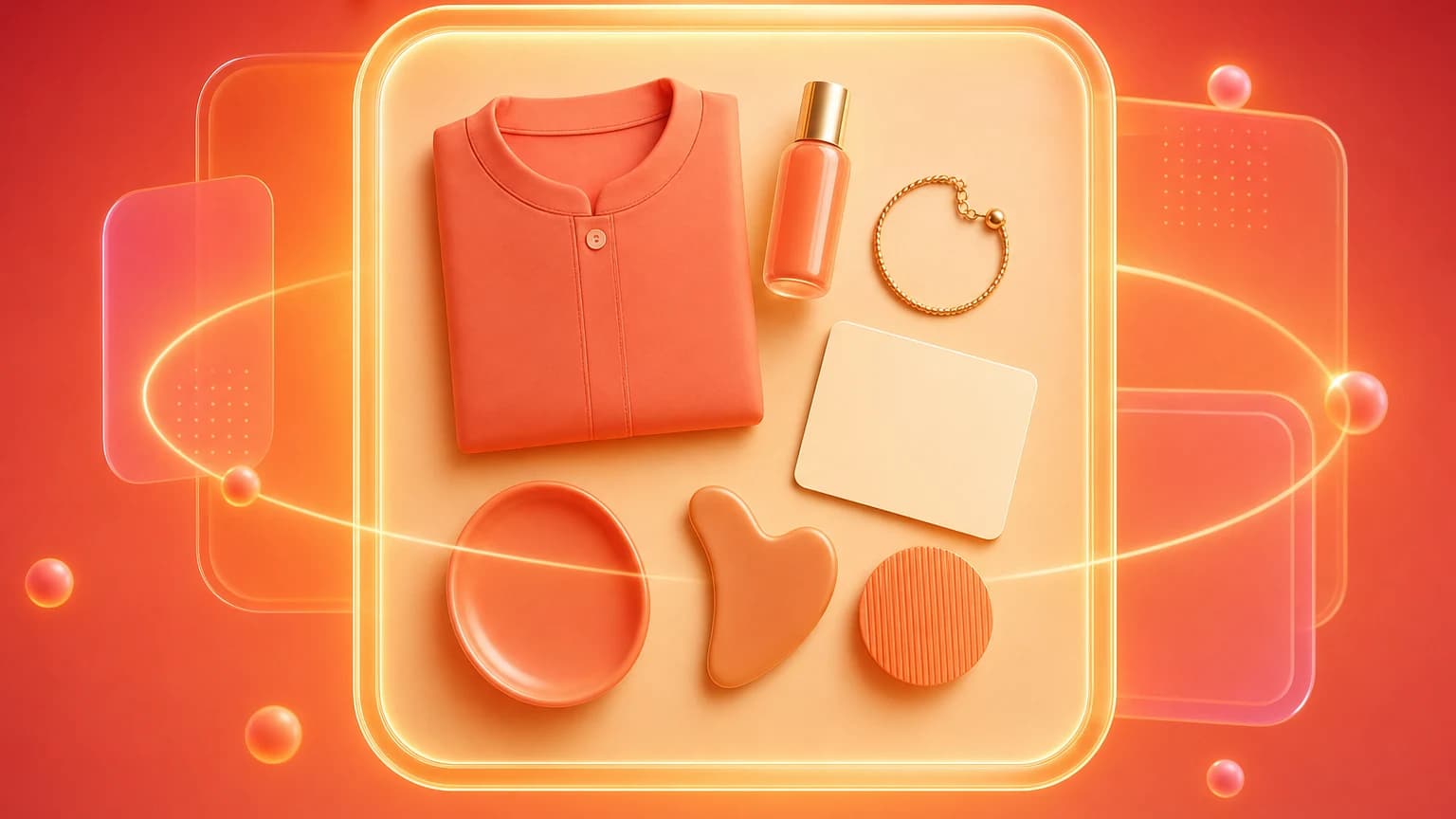
Product photography props can make an ecommerce image more useful, more memorable, and more believable. They can also ruin a listing. The difference is intent. A good prop explains context, scale, use case, material, mood, or buyer lifestyle. A bad prop competes with the product, implies something false, clutters the frame, or makes the image look like decoration rather than commerce.
For sellers, props should be chosen by image role. A main image usually needs no props. A lifestyle image may need context. A scale image may need a familiar object. A social ad may use atmosphere. A premium detail image may use a surface or fabric prop to support the product's material story. The prop should earn its place.
Quick answer
Use props that help buyers understand the product. Choose contextual props to show use, scale props to show size, and atmosphere props to create brand mood. Keep the product dominant, avoid props that are not included in the sale unless the image role is clearly lifestyle, and do not imply ingredients, accessories, or features the product does not have.
Three prop types
The best ranking guides organize props by function. Contextual props show the product in use, such as coffee beans beside a coffee bag or a towel near skincare. Scale props help buyers understand size, such as a hand, coin, card, shelf, bowl, or model. Atmosphere props set mood, such as linen, stone, greenery, paper, ribbon, or colored blocks.
This framework is more useful than a generic list of props. A mirror can be excellent for jewelry but distracting for food. Linen can support skincare, candles, and handmade goods, but feel wrong for electronics. Artificial ice can help a beverage ad, but it does not belong in a supplement main image.
Category examples
- Beauty: stone trays, towels, water drops, leaves, bathroom counters, soft fabric.
- Jewelry: fabric folds, hands, display stands, jewelry boxes, mirrors, gemstone surfaces.
- Food: bowls, plates, ingredients, utensils, napkins, mugs, pantry shelves.
- Apparel: hangers, folded fabric, model context, shoes, bags, simple surfaces.
- Home goods: shelves, books, lamps, plants, room context, measurement references.
- Electronics: desks, cables, cases, hands, clean studio surfaces, scale objects.
Category fit matters because props communicate expectations. A prop can make a product look premium, handmade, playful, technical, natural, or giftable. It can also create confusion. If a candle is surrounded by lavender, buyers may assume it smells like lavender. If a snack is shown with strawberries, buyers may assume strawberry flavor.
Scale props
Scale props are underused and often more valuable than decorative props. A buyer cannot hold the product, so the image must provide size context. Use a hand, counter, shelf, bag, mug, book, phone, coin, model, or package contents image when size affects purchase confidence.
Scale props should be accurate and familiar. Do not use a tiny prop to make the product feel larger. Do not place a product in a scene where its size becomes ambiguous. If dimensions matter, pair the scale prop with a simple measurement image.
AI scenes
AI product photography makes prop testing faster. A seller can generate several scene variations around the same source product: minimal stone surface, warm kitchen counter, linen flat lay, seasonal gift scene, or clean studio blocks. This is useful for ads and Shopify product galleries, but it requires review.
Prompt props specifically. Instead of asking for a beautiful lifestyle scene, describe the exact supporting objects: a ceramic bowl, folded linen napkin, two coffee beans, and warm morning light. Specific props create more believable scenes and reduce the chance that AI adds random objects that distract or imply false product claims.
Mistakes
The first mistake is using too many props. Ecommerce photos are not still-life competitions. The product should remain the hero. The second mistake is implying included accessories. If a spoon, pouch, stand, or gift box is not included, make sure the image context is clear. The third mistake is choosing props that do not match the buyer's real use case.
The fourth mistake is using props on images that should be clean. Marketplace main images usually need the product only. Save props for secondary images, owned-store galleries, ads, and social content.
Checklist
- Choose props by image role, not decoration.
- Keep the product visually dominant.
- Use contextual props to explain use case.
- Use scale props when size affects buying decisions.
- Avoid props that imply false ingredients, accessories, or features.
- Use fewer props for marketplace images and more controlled styling for ads.
- Review AI-generated props before publishing.
A prop is useful when it answers a buyer question. It is noise when it only fills space.
Sources reviewed include ecommerce prop styling guides, product photography props guides, category-by-category styling recommendations, and seller discussions about lightboxes, ring lights, props, and AI-generated product scenes.
Use Shelfgen to test backgrounds, props, and lifestyle scenes without reshooting every SKU.
Compare what Amazon, Shopify, Etsy, eBay, Google Shopping, and TikTok Shop need from each image role.
See the tools for background removal, product scenes, infographics, brand presets, and batch exports.
Follow the step-by-step help article when you are ready to generate and download your first output set.